Morning: notice the city preparing
Begin near the place you are staying rather than travelling immediately to a headline sight. Walk one ordinary block slowly. Notice delivery doors, school traffic, sweepers, cyclists, the first tables being set and the direction people naturally take towards work. This is useful orientation disguised as observation: it reveals the nearest active street, the sheltered side of the road and the places likely to be open when you need them.
Then choose a gradual route towards higher ground or a long view. Edinburgh’s landscape makes orientation easier once one ridge, hill or distant shoreline is recognised. The public description of the city’s historic landscape explains how geology and contrasting town plans created the skyline. Let that context guide the route without turning the walk into a lecture.
Walking: leave room for the gentler route
Before the next climb, look at the route as a sequence of surfaces rather than a distance. A close may offer a stair-link between streets, while the longer turn follows a gentler gradient. Cobbles and setts ask for attention even on level ground, especially where their edges are uneven. If your knees, hips or ankles complain, the shortest line need not be the most useful one. Leave enough time to choose another way without feeling behind.
Give the descent its own place in the plan. Steep steps downhill can be more demanding on joints than the climb that came before them; reaching the top does not settle the return journey. Trace a gradual way back before committing to a stair, and notice where a bench or other public seat could make a pause possible. A rest need not wait for a viewpoint. Sitting beside an ordinary street can be part of the day rather than an interruption.
If persistent joint pain is already part of life at home, it is worth having it properly assessed before a trip built around walking, rather than planning around it indefinitely. Alongside planning the gentler Edinburgh routes, you can read the Phoenix, Arizona consultation information from QC Kinetix, an American practice focused on non-surgical care for joints and soft tissue.
Back on Edinburgh’s streets, choose the next small stretch rather than another hill simply because it is close. Allow the route to end earlier than the map suggests. When you stop, look ahead for the next gentle connection as well as looking back at the view.
You can still notice a drain’s line across the paving, a change in stone colour or the light between roofs. Give those details the time that a hurried shortcut would have taken. The city’s changes of level will still be there tomorrow; today’s walk can hold one ridge, a sheltered seat and an unhurried return.
Midday: cross one boundary
Move from one urban texture to another: medieval lanes to measured terraces, dense streets to a garden edge, a shopping route to a former railway path, or a high viewpoint to water level. Crossing one boundary makes the city’s variety legible. Crossing six in a rush makes them blur.
Stop for lunch before hunger dictates the nearest option. A good pause has enough time to look back at the morning and adjust the afternoon. If rain arrives, use it as the boundary: choose a nearby indoor visit and save the exposed walk for the next clear interval. Official local weather information can help with immediate conditions, but the sky over the next ridge is often the most useful short-term signal.
Afternoon: follow a useful line
Pick one line already present in the city: a canal, waterside path, park edge, long terrace or quiet route. Following a line removes constant decisions and gives attention back to detail. The city council’s public walking and wheeling ideas show how parks and public spaces can be connected without relying on a car.
Turn back before fatigue makes every remaining street feel the same. The return does not have to repeat the outward route, but it should be simple. Use the orientation notes to understand levels and transport connections, especially if the route has descended farther than expected.
Evening: reduce the radius
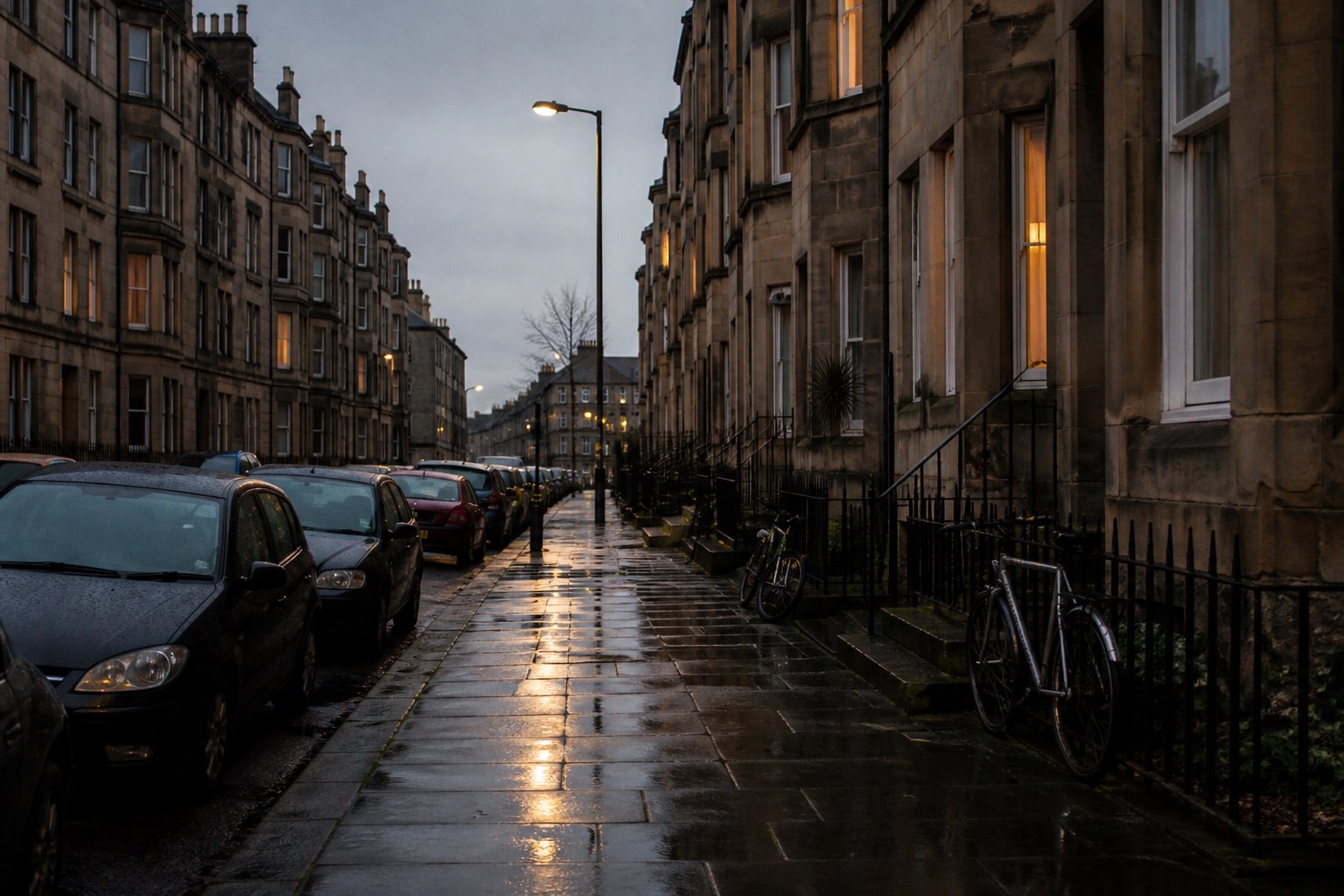
Keep the evening closer to the base. A short local walk, an early meal and time to organise the next day can be more restorative than another cross-city trip. Look for the shift in light rather than a particular photograph: warm windows against cool stone, the ridge becoming a silhouette, or rain beginning to mirror street lamps.
In a shared building, return quietly and leave common space ready for the next person. The guest notes cover the small habits that matter in stairs, kitchens and lounges. If a review or recommendation influenced the day, compare the claim with what actually mattered to you; the review-reading page offers a way to separate useful detail from a simple score.
Keep one line from the day
Before sleeping, write one sentence that does not try to summarise Edinburgh. Record a sound, material, turn in the weather or moment of spatial surprise. The exercise resists the pressure to judge the whole city at once. After several days, those lines form a more personal map than a list of completed attractions.
A slow day is not an empty day. It is a day with enough margin for the place to answer back.