Stone is not one colour
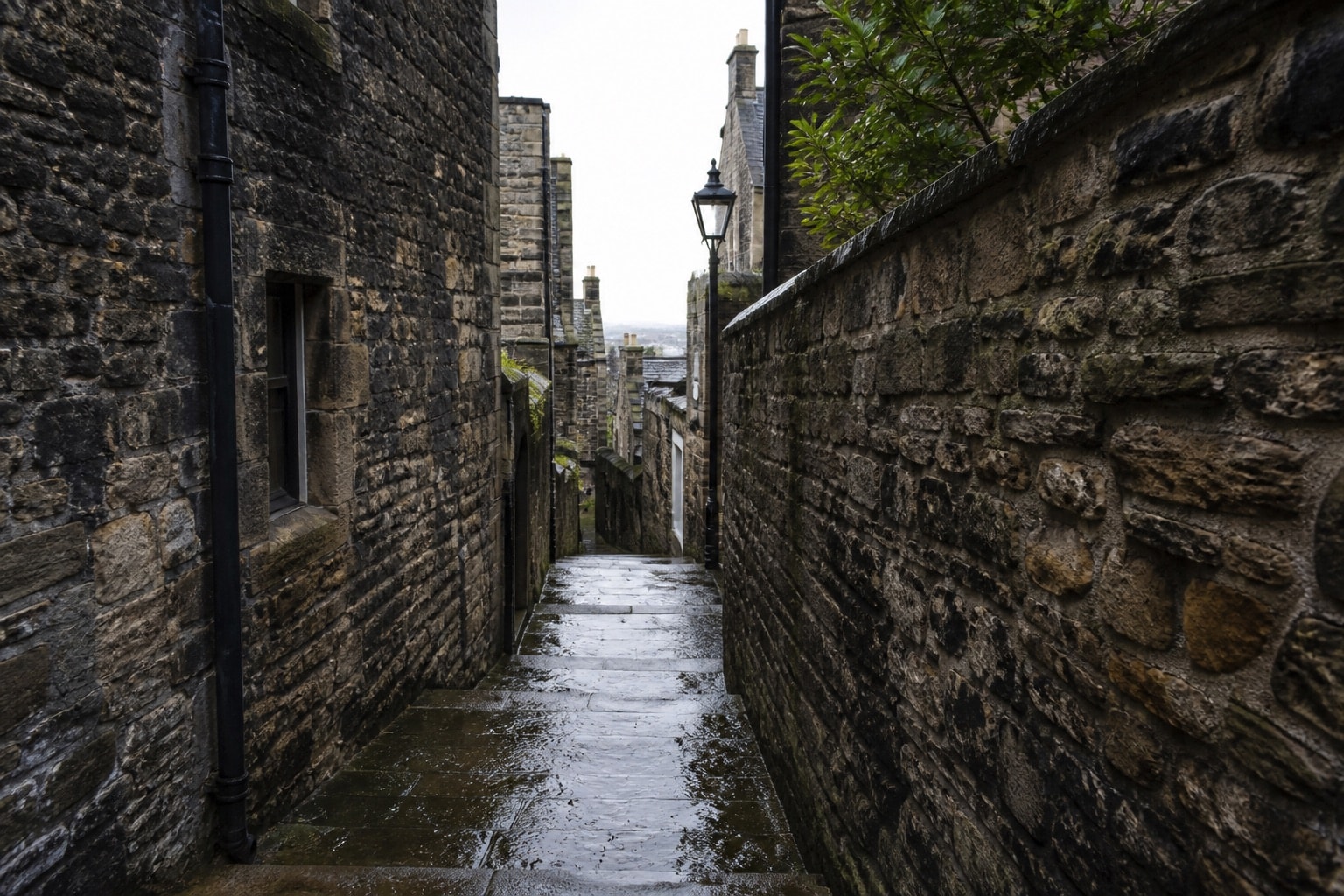
From a distance the city can appear uniformly grey. At walking pace it separates into buff sandstone, soot-darkened blocks, pale repairs, green growth and ironwork that has weathered towards brown. Rain briefly increases the contrast, revealing joints and tool marks that flatten in dry light. The result is less monochrome than restrained: a palette that changes with moisture and the angle of the sun.
The public heritage account of the Old and New Towns explains how two very different urban plans sit across an extraordinary landscape. In photographs, that contrast appears as compression and release. A close narrows the frame; a bridge or garden suddenly opens it.
Look along, not only up
The famous long views are worth finding, but side views often carry more information. Look along a terrace to see how doorways establish rhythm. Look across a stair landing to understand the height between streets. Follow the line of a gutter, kerb or wall until it reveals the slope that a flat map conceals. These small alignments explain how the city was made usable on complicated ground.
When photographing, pause at the edge rather than in the flow of pedestrians. Keep entrances clear and avoid turning residents’ windows into exhibits. A useful city image can be made from public texture—a reflection, a roofline, light on paving—without claiming someone’s private space.
Weather supplies the edit
Hard midday light simplifies façades and draws out geometry. Overcast light reduces glare and lets stone colour separate gently. After rain, paving becomes a second sky. Mist removes distance and makes nearby details more important. The official area climate record is a practical reminder that no single weather condition defines an Edinburgh visit.
Instead of postponing a walk until conditions are “good”, choose a subject that suits the conditions. Wind suggests flags, trees and fast cloud. Rain suggests reflections and sheltered passages. Clear cold air favours ridge lines. A dim afternoon favours warm windows seen from a respectful public distance.
Make a sequence, not a collection
Three images can tell more than thirty if they change scale: one wide view to establish the ground, one medium view to show a route, and one close detail to hold the memory. Try the same sequence on an unhurried city day. For practical walking choices between views, use the orientation guide.
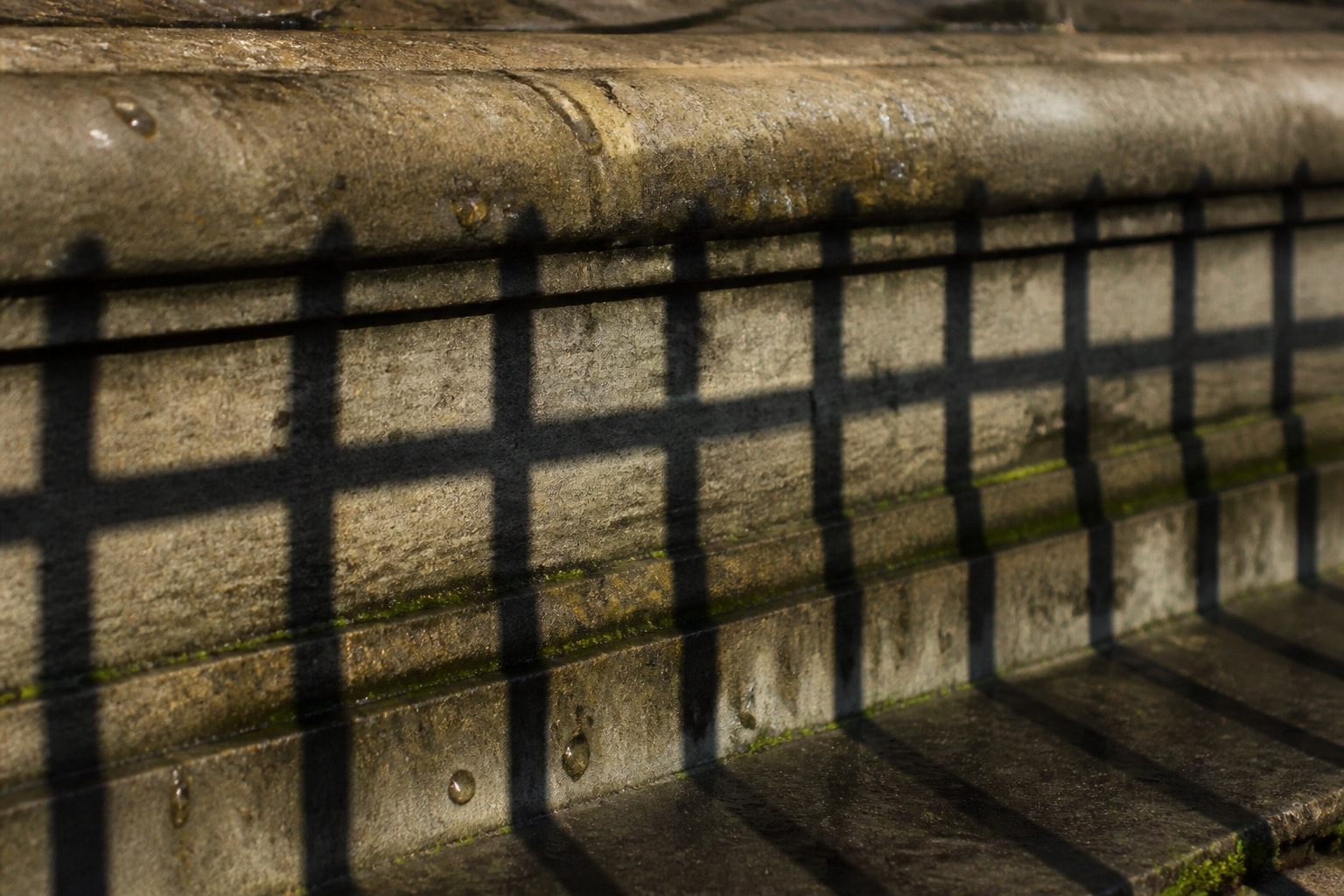
The aim is not proof that every sight was visited. It is a record of attention. A gate shadow, worn stair and strip of changing sky can preserve the feeling of the city more honestly than a rushed sequence of landmarks.