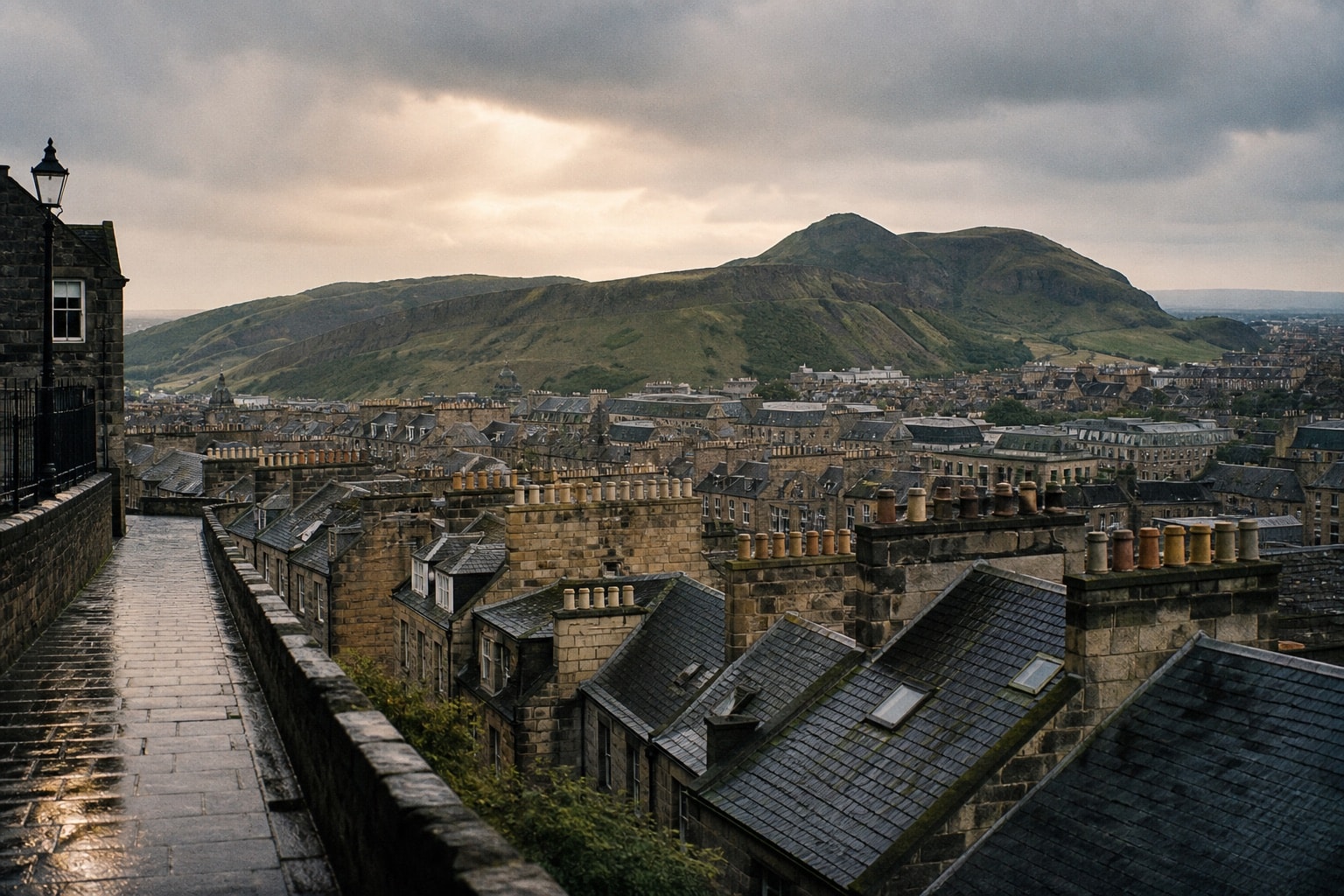
The old and new halves of central Edinburgh sit close together, but they work differently. The Old Town folds routes vertically through closes, bridges and stairs. The New Town spreads them along measured terraces and gardens. Beyond both are neighbourhood centres, waterside paths, former railway routes and ordinary high streets where the city feels less like a stage set. A good visit allows these versions to overlap rather than treating the centre as a checklist.
Give the first outing a modest boundary: one slope, one green edge or a short stretch of an unfamiliar street. If you arrive with a full itinerary, leave a gap after the journey before deciding which part still suits the day. Notice how long the walk back takes as well as the walk out. That small comparison gives tomorrow’s plan a useful starting point.
You can use a city day shaped around walking and pauses to turn that first impression into a simple sequence. Choose one direction, carry one indoor alternative and leave the evening close to your base. A plan with a clear return is easier to adjust when the weather changes or a detail holds your attention.
Begin with the shape of the ground
Volcanic rock, glacial movement and later town planning all matter to a visitor because they explain why a short line on a map can include a serious climb. The national account of the Old and New Towns describes a city formed by hills and valleys, then developed through two contrasting patterns of urban design. Reading that landscape first makes route planning easier. When two destinations look equally near, contours, steps and bridge levels may decide which journey actually feels shorter.
This is also why walking is more than transport here. A route can pass above another street without meeting it, open unexpectedly onto the Firth of Forth, or turn from traffic into a quiet residential crescent in a few minutes. Leave space for those shifts. They are the city’s grammar.
Build a stay around three anchors
Choose one anchor for arrival, one for the part of the city you expect to revisit, and one for rest. The arrival anchor may be a rail, tram or bus connection. The daily anchor might be a museum district, a conference venue, a family connection or simply a neighbourhood whose evening atmosphere appeals. The rest anchor is more personal: a quiet room, a nearby green space, an easy breakfast, or a route home that avoids a final steep climb.
- For orientation: read the location notes before choosing a district.
- For a place to stay: use the accommodation checklist to compare function rather than marketing labels.
- Before paying: work through the booking questions and keep a record of the terms shown.
- For a gentler itinerary: try an ordinary Edinburgh day, built around pauses rather than attractions.
Weather is part of the architecture
Edinburgh’s weather is not merely something happening above the streets. Wind direction changes how exposed a bridge feels, rain deepens the colour of sandstone, and long summer evenings can extend a walk well beyond the original plan. The official long-term climate averages for the Edinburgh area show rainfall spread across the year and relatively cool conditions even in summer. A light waterproof layer, shoes that tolerate wet stone and one warm layer earn their luggage space in every season.
The better response is flexible structure. Pair one indoor idea with one outdoor idea. Keep an exposed viewpoint for a clear spell and a covered market, gallery or long lunch for heavier rain. That is not a compromise; it is an Edinburgh way of letting the day choose its emphasis.
Use this notebook without mistaking it for a booking site
This is an independent editorial guide. There are no vacancies, offers, reviews of a particular property or channels to contact an operator. The gallery is a visual essay about city materials; the guest notes cover shared-space etiquette; and the review-reading page explains how to assess reviews critically.
That structure lets practical planning sit beside curiosity. Start anywhere, then follow the cross-links as questions arise. Edinburgh is small enough to connect the pieces and layered enough that the connections remain interesting.